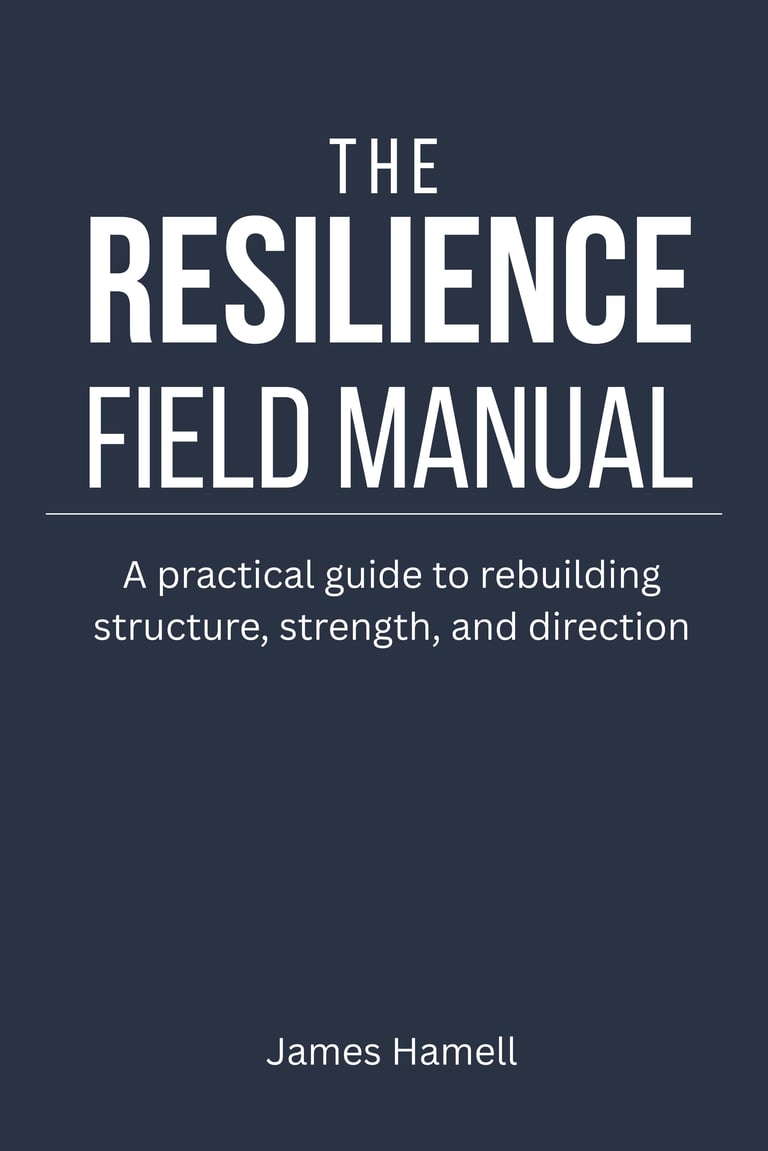
The Resilience Field Manual by James Hamell
A practical collection of tools for daily structure, manageable action, and reflection — designed to be used one tool at a time.
Who it's for
The Field Manual is written for anyone who has been through a difficult period and is rebuilding day by day — whether that's after an acute breakdown, a longer struggle, or simply a season where everyday life has felt hard to organise.
A self-guided resource you can use on your own, returning to the parts that help today
Not a course or programme — there's no set order and no expectations to keep up with
Focused on stabilisation — grounding, basic structure, and small repeatable actions
A standalone tool that works on its own, without needing coaching or other services
Built on lived experience and the FORGE pillars
The Resilience Field Manual does not provide therapy or clinical treatment and is not a substitute for professional mental health support. It focuses on self-reflection, personal responsibility, and simple stabilising practices.
"For moments when thinking harder doesn't help"
A short overview
The manual moves through three broad parts. You don't need to follow them in order — each part is designed to be returned to as helpful.
For moments when life has broken down and nothing feels stable yet. It focuses on naming what happened, reducing overwhelm, and staying present without rushing to fix or reframe — creating enough steadiness to continue.
The FORGE framework as a practical structure for rebuilding. It focuses on stabilising daily life, taking small actions, and reconnecting to meaning — designed to be cyclical and repeatable, without pressure.
Standalone tools for moments when structure is fading or motivation is low. You don't use them in order — you use what fits today.
Action Audit
See where your energy actually went.
Daily Battle Plan
Define a minimum effective day.
The One-Action Reset
Break paralysis by completing one small action.
The Done List
Evidence that you showed up.
Habit Design
Make habits easier to start and easier to repeat.
Define a Win
Decide what "enough" looks like before the day runs away.
Each tool can be used on its own. No momentum required.
Important: The Resilience Field Manual is an educational, self-guided resource. It does not provide therapy or clinical treatment and should be used alongside appropriate professional support where needed.
The author
James Hamell
James Hamell created FORGE following his own experience of severe mental illness and rebuilding everyday life. Small routines and practical actions played a part in that experience and helped shape the resources he now shares.
He is the author of Hope Through Discipline and The Resilience Field Manual. FORGE focuses on practical, non-clinical tools for daily structure, manageable action, and reflection.